
Scanner guide
Phone 3D scan to STEP: from a scan app to a CAD solid
A phone 3D scan to STEP takes two checks before the conversion: export a mesh format (OBJ, STL or PLY), and make sure the scan has its real size. Then upload it to OperGo Surface and download a STEP your CAD opens as a solid, after checking how far it departs from your scan.
STL, OBJ, PLY, 3MF or AMF · in millimeters
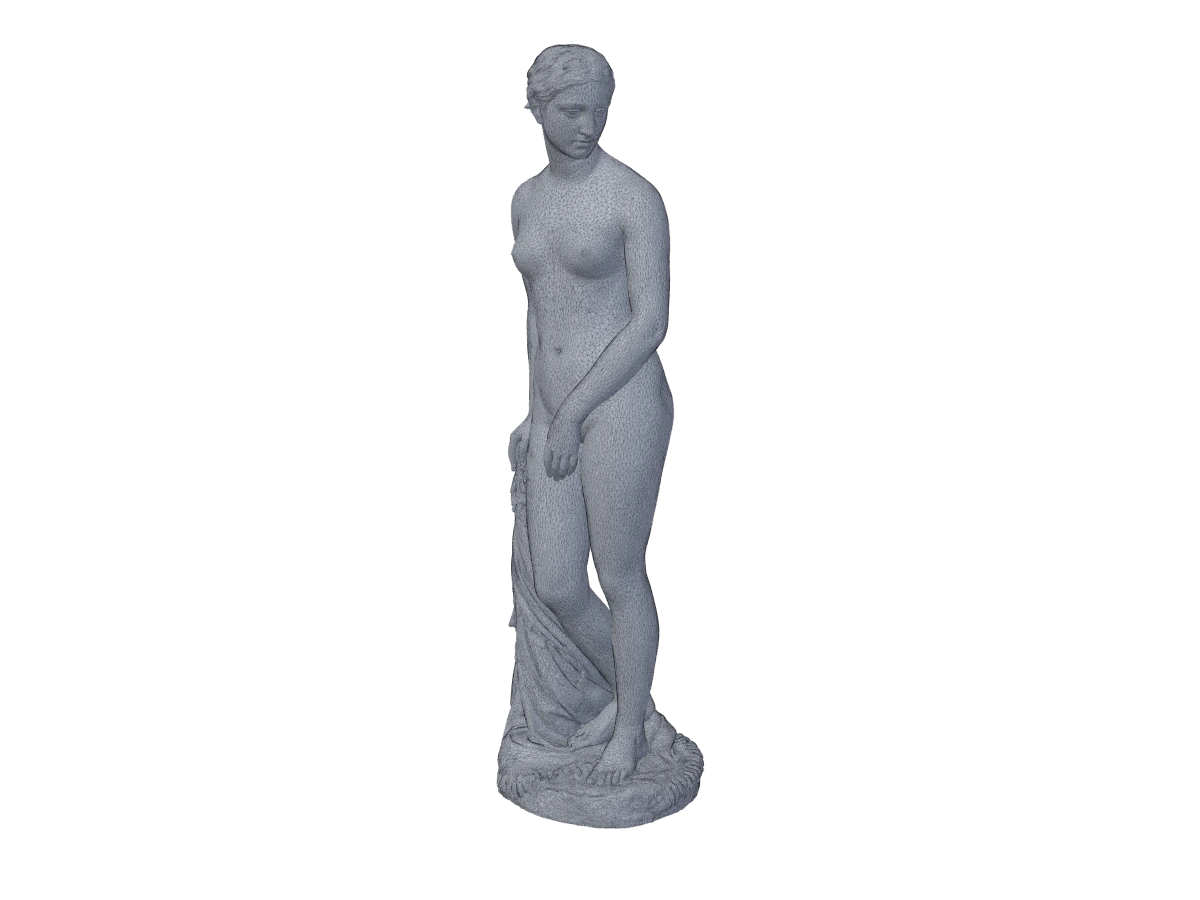 Before
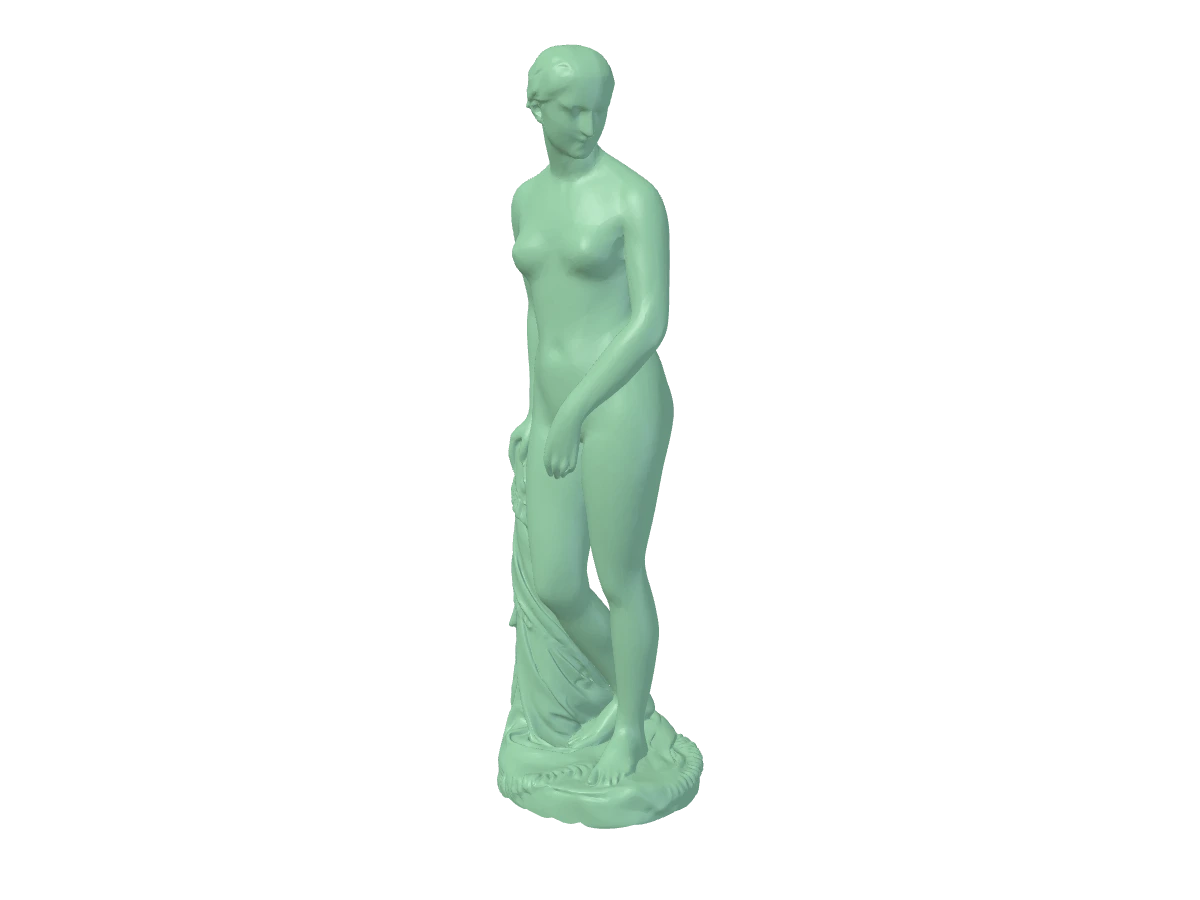 After
Which file to export from each app
OperGo Surface reads OBJ, STL and PLY meshes. Formats for viewers and 3D apps, such as GLB, GLTF, USDZ and FBX, are not read.
| App | Mesh formats it lists | What to export |
|---|---|---|
| Polycam | OBJ, STL, FBX, DAE, USDZ, GLTF; the free plan exports GLTF only | OBJ or STL, which need a paid plan |
| KIRI Engine | OBJ, STL, PLY, FBX, GLB, GLTF, USDZ; LiDAR scans OBJ and USDZ | OBJ or STL |
| Scaniverse | SPZ, PLY, GLB and FBX in its store listing; OBJ in some versions | OBJ, if your version lists it. A splat PLY is not a mesh |
| RealityScan | OBJ on iPhone, GLB on Android, as of version 1.5 | OBJ. From Android, the GLB is not read |
| Apps built on Apple Object Capture | USDZ | Not read, unless the app also offers OBJ or STL |
From each app documentation, store listing or release notes, checked on 26 October 2026. Plans and export lists change: check the export menu of your version.
Fix the scale before you export
A scan made from photos rebuilds the shape, not its real size. KIRI Engine says it directly: without a reference measurement, a scan can come out at a plausible but incorrect scale. A part at the wrong size gives a STEP at the wrong size.
Measure one distance on the real part, such as its length or a hole spacing, and set it in the app before you export, if it has a tool for it. KIRI Engine added one in version 4.2: you mark two points and type the real distance. Check scans made with LiDAR as well.
OperGo Surface reads OBJ, STL and PLY in millimeters, because these files store no units. If the part comes out 25.4 times off, turn on "Is your file in inches?". After upload, compare the size shown with the distance you measured.
From a phone scan to STEP
Scan and set the scale
Capture the part, then set one real distance in the app, if it lets you.
Export OBJ, STL or PLY
Pick a mesh. Not a splat, not a point cloud, not GLB or USDZ.
Upload, pick the mode and check
A whole object converts as a Closed part and gives a solid; a scan of one side gives an Open surface. Check the size and the deviation map.
Download the STEP
Open it in your CAD as a solid. Viewing is free at every quality.
What to expect from a phone scan
- Soft detailThe STEP follows the mesh, so small details and sharp corners come out as soft as they are in the scan.
- Holes and the floorThe underside of a part is often not scanned, and the floor is scanned with it. Cut the floor away and decide whether to close the hole or keep an open surface.
- A STEP export in the appIf your app offers a CAD or STEP export, open the result and check whether it has one flat face per triangle: see faceted vs smooth STEP.
Questions about phone 3D scan to STEP
Can I turn a Polycam scan into a STEP?
Yes. Export the scan as OBJ or STL, which Polycam lists on its paid plans, check its size, and upload it.
Why is my phone scan the wrong size?
A scan made from photos has no real size of its own, and OBJ and STL files store no units. Set a known distance in the app before you export, then check the size after upload.
Can I use a GLB or USDZ file?
Not directly. Export OBJ, STL or PLY from the app instead.
Is a phone scan good enough for a STEP?
For a reference shape, a cover or a part to design around, often yes. For tight fits, measure the dimensions that matter on the real part, or use a dedicated scanner: see 3D scanner to STEP.
Is OperGo part of any of these apps?
No. The app names belong to their owners, and OperGo is not affiliated with any of them.
Related guides
3D scanner to STEP
3D scanner to STEP: scan software exports a mesh, not a STEP. What Revopoint, Creality, Shining 3D, 3DMakerpro and phone apps export, and how to convert it.
3D scan to CAD
3D scan to CAD in plain terms: what a scanner gives you, which mode fits your scan, how to prepare it, and how to check the STEP you get.
OBJ to STEP
Convert OBJ to STEP online. Upload your OBJ file, check the result in 3D against your mesh, and download a STEP your CAD can open.
Faceted vs smooth STEP
Faceted vs smooth STEP: a faceted STEP has one flat face per triangle. Check your file in a minute and learn how to get smooth surfaces instead.
STL vs STEP
STL vs STEP: an STL is a list of triangles that describes only the surface shape; a STEP holds exact surfaces and solids a CAD can measure and edit.
Convert STL to STEP
Convert STL to STEP online. Smooth surfaces, and exact planes and cylinders on CAD parts, not one flat face per triangle. Check the result before downloading.
Put your phone scan to the test
Upload the mesh from your scan app and see the result in 3D next to it. Viewing is free at every quality.